
Hunter Safety Practice Test
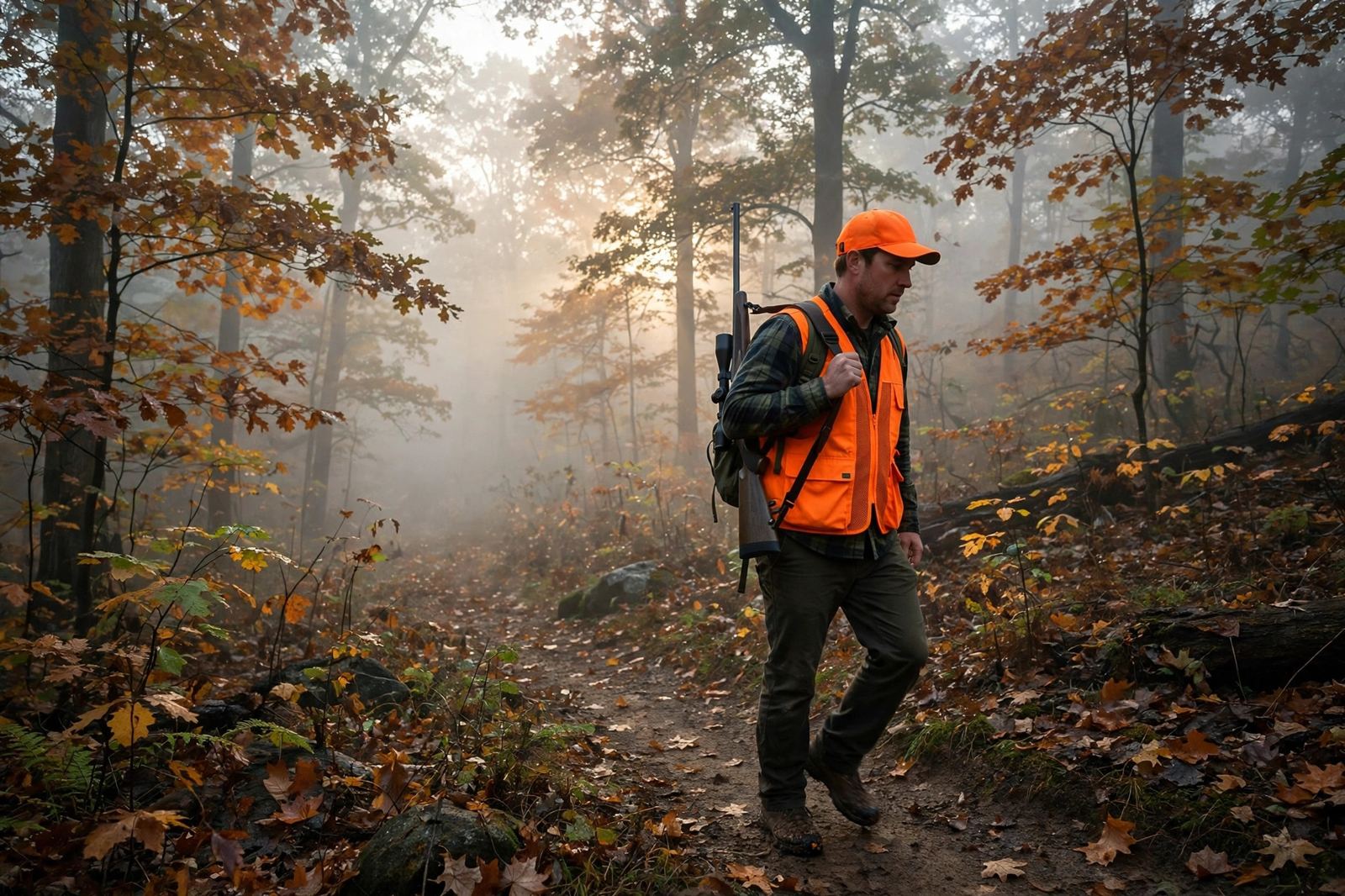
Maybe it's your first fall in the deer woods, or maybe you're taking the course at the same time as your kid so you can hunt together. Either way, this free 100-question practice test covers what the real hunter education exam leans on — safe gun handling (TAB-K), avoiding tree-stand falls, fair chase, reading wildlife sign, and what to do when a day hunt goes sideways — so the questions feel familiar when they count.
Part of our Trades & Safety Practice Tests collection — every test is free with answers and explanations.
Hunter Safety Practice Test: Exam Overview
- Exam format
- State-approved hunter education course exam: typically 50–100 multiple-choice questions (about 60 on most online courses), taken after online or classroom coursework; some states also require an in-person field day with a live-fire exercise
- Practice questions
- 100 practice questions
- Time limit
- The online course runs about 3–6 hours at your own pace; written exam time limits and formats vary by state
- Passing score
- Usually 75–80% correct, set by your state (for example, 80% on the Texas field-course exam, 75% in Utah and Iowa)
Key facts: Hunter Safety Practice Test
- Exam format: State-approved hunter education course exam: typically 50–100 multiple-choice questions (about 60 on most online courses), taken after online or classroom coursework; some states also require an in-person field day with a live-fire exercise
- Time limit: The online course runs about 3–6 hours at your own pace; written exam time limits and formats vary by state
- Passing score: Usually 75–80% correct, set by your state (for example, 80% on the Texas field-course exam, 75% in Utah and Iowa)
- This practice test: 100 free original multiple-choice questions with answers and explanations — no signup required.
Practice by topic
How to use this Hunter Safety Practice Test
Go trade by trade through the topics, or run the full 100 for a realistic drill. Each explanation cites the rule or principle behind the answer — on trades exams, knowing why a procedure is required matters as much as knowing the procedure itself. Reset and retake until the code-related questions feel automatic.
Studying for another trade or safety certification? See all our Trades & Safety Practice Tests , each with free questions and explanations.
Hunter Safety Practice Test FAQs
Can I take hunter safety online?
In many states, yes — approved providers like Hunter-Ed (Kalkomey) and others run the whole course online, and some states let adults finish entirely that way. But rules split by age: younger students in states like Iowa and Utah still have to attend an in-person field day with a live-fire exercise after the online part. Check your state wildlife agency's rules for your age group before you sign up.
How old do you have to be to get certified?
It depends on the state. Many states set the minimum for online certification around 9 to 12 (Tennessee's online course starts at 9; Iowa's online-plus-field-day track covers ages 11–17). Kids younger than the cutoff can often still hunt under an apprentice or mentored license while hunting with a licensed adult, so a young hunter rarely has to sit the season out.
Does my hunter education card work in other states?
Yes. Certification is recognized in all 50 states — and in Canada and Mexico — through IHEA-USA reciprocity, and once you earn it, it does not expire. You will still buy the other state's own nonresident license, tags, and stamps; the card just means you never have to retake the course to hunt somewhere new.
How many questions are on the real exam, and what do I need to pass?
Most state exams run 50 to 100 multiple-choice questions — about 60 is typical for the popular online courses — and the passing score is usually 75% to 80% depending on the state. Failing is not the end of the road: online courses generally allow retakes, and instructors can usually retest field-day students. Practice with realistic questions first and you probably will not need them.
What actually happens at the field day?
Think of it as the hands-on half of the course, usually a few hours to a single day. You will walk a skills trail, practice carrying and handing off a firearm safely, cross a fence the right way, shoot a live-fire exercise, and sit through an ethics discussion and the written exam. Bring your online course completion voucher or quiz results — most instructors cannot check you in without it.
I'm an adult. Do I really need hunter education to buy a license?
Often, yes — most states require it if you were born after a cutoff date, and the cutoff is earlier than many people expect (Tennessee uses January 1, 1969, for example). If you were born before your state's date you may be exempt, and several states offer one-season apprentice licenses that let you try hunting with a mentor first. Either way, plenty of adults take the course voluntarily before their first season — it is built for exactly that.